About Release
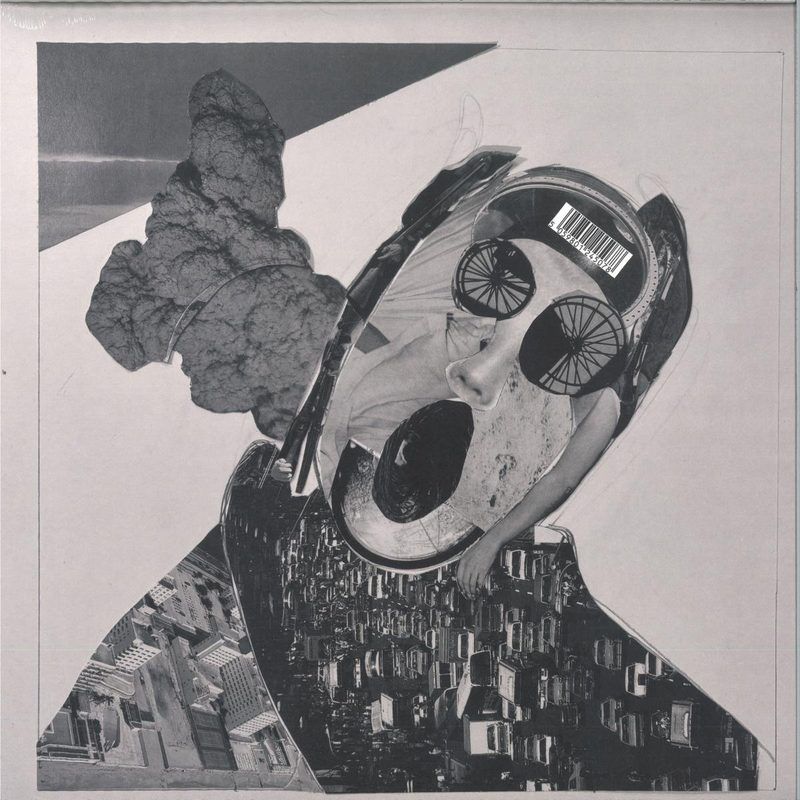
Romare returns with Oblivion, his fifth studio album and the first full-length statement on his All You See imprint, issued as ALLYOUSEE001 on a double 12-inch vinyl pressing in September 2026. Across 13 tracks, Archie Fairhurst turns his meticulous sample-based approach toward the anxieties and contradictions of contemporary life, creating an album that moves between downtempo, broken beat, house, trip-hop, electronica and leftfield grooves. The result is one of Romare’s most conceptually focused records to date: a richly textured collage of rhythm, speech, melody and archival sound that examines technology, social structures, environmental uncertainty and the complicated relationship between human beings and the machines surrounding them.
The name Romare has become closely associated with the art of musical collage. Fairhurst takes his name from American artist Romare Bearden, whose work was built around the recombination of existing images into new visual narratives. The same principle has shaped Fairhurst’s production since his emergence in the early 2010s. Rather than treating sampling simply as a method for creating loops, he approaches recorded material as a vast archive of voices, instruments, rhythms and cultural references that can be cut apart and reconstructed into entirely new contexts. On Oblivion, that technique becomes particularly purposeful, with the sampled material serving the album’s larger narrative rather than existing purely for sonic colour.
The opening track, “War Path”, establishes the darker atmosphere of the album. It introduces the record as something more contemplative and uneasy than a straightforward dancefloor release, with rhythm and sampled material creating a sense of forward movement without resolving into conventional club euphoria. The track sets up the tension that runs throughout Oblivion: the music remains colourful and rhythmically engaging, yet beneath the surface there is a persistent feeling of uncertainty.
“Take Us” follows with a harder stepping, boom-bap-influenced groove. The rhythmic structure gives the track a physical quality while the surrounding samples create a narrative about the increasingly complicated relationship between people and screens. It is a good example of Fairhurst’s ability to make a serious subject function within an immediately enjoyable groove. The track does not turn into an abstract political statement; instead, the ideas are embedded within the rhythm, vocal fragments and shifting sonic details.
“Computer Love” takes the technological theme further. The track settles into a sumptuous trip-hop lullaby, incorporating science-fiction flourishes derived from samples of old computer documentaries. The contrast is central to its appeal: the music sounds warm and almost romantic while the source material points toward the increasingly complicated relationship between human emotion and technology. It is simultaneously nostalgic and futuristic, using archival voices and electronic textures to create a bittersweet atmosphere.
“Machines” moves back toward a more explicit four-to-the-floor framework. A throbbing pulse is accompanied by a German-language recital of Johann Wolfgang von Goethe’s “Blessed Longing”, an 18th-century text concerned with human existence and transformation. The juxtaposition is quintessentially Romare: historical material is removed from its original context and placed inside a contemporary electronic environment, creating a conversation between the past and the present. The steady machine-like rhythm gives the piece an additional layer of meaning as the human voice sits against an increasingly mechanical pulse.
“They Love It” and “The Need” continue the album’s movement between groove-led production and more atmospheric passages. The sequencing is important: Oblivion does not behave like a conventional collection of singles. Instead, the tracks function as chapters in a larger work, allowing Fairhurst to alternate between rhythmically direct pieces and more reflective moments without breaking the album’s conceptual flow.
“Breathe” provides one of the album’s most immediately accessible moments. Its relaxed rhythmic character gives the record space to open up, while Fairhurst’s use of carefully selected fragments maintains the sense that every sonic element has been chosen for a reason. The track demonstrates the lighter side of the Romare aesthetic without abandoning the album’s underlying tension.
“Deeds, Not Words” shifts the focus toward social and political concerns, continuing the album’s examination of power, collective action and contemporary instability. The title itself establishes a more direct relationship with those themes, while the production retains Fairhurst’s preference for groove and texture over conventional songwriting structures.
“Fearful Symmetry” and “Questions” deepen the album’s more introspective side. Rather than offering straightforward answers, the record repeatedly creates spaces in which ideas can remain unresolved. This is one of the defining characteristics of Oblivion: its conceptual framework is serious, but its musical language remains open-ended. Downtempo passages, broken rhythms, electronic textures and fragments of speech allow the listener to interpret the material rather than being given a single predetermined conclusion.
“Change” and “The Last Lullaby” bring the album toward its closing stages. The atmosphere becomes increasingly reflective, with the rhythmic momentum giving way to more spacious arrangements. The sequencing reinforces the sense of a journey through uncertainty rather than a conventional rise toward a final peak.
The final track, “Light of Imagination”, is particularly significant on the physical edition. The double-vinyl release contains this track exclusively on vinyl, making it unavailable on the standard digital album. That gives the 2x12-inch edition a genuine collector’s value beyond simply presenting the album in analogue format. The D-side also features the first colour label used on the physical release, while the records themselves are issued as black vinyl.
Oblivion also marks an important stage in Fairhurst’s development as a producer. His earlier catalogue included three of his previous four albums on Ninja Tune, but the new album arrives through All You See, his own imprint. The move allows the conceptual and visual world surrounding the music to become part of a more independent framework. Fairhurst’s previous album Fantasy already showed a gradual movement toward incorporating more of his own instrumentation and vocals alongside his sampling techniques; Oblivion develops that approach while returning the sampled archive to the centre of the artistic narrative.
For DJs, Oblivion offers material across several tempos and rhythmic approaches rather than functioning as a conventional club LP. “Machines” provides a clear four-to-the-floor connection, while “Take Us”, “Computer Love” and other cuts explore broken, hip-hop-derived and downtempo structures. This makes the album particularly useful for selectors working across leftfield house, broken beat, electronica, downtempo and eclectic late-night sets.
For collectors, ALLYOUSEE001 is especially notable because it establishes All You See as the home for a major new Romare album while giving the physical edition material unavailable elsewhere. The double 12-inch format provides the space necessary for an album whose appeal depends heavily on detail, dynamic sequencing and the interaction between individual pieces. The vinyl-only “Light of Imagination” makes the pressing more than a simple physical reproduction of the digital release.
Romare – Oblivion is ultimately an album about the present viewed through the fragments of the past. Archival voices, sampled instruments, electronic rhythms and carefully constructed grooves are assembled into a contemporary collage that addresses technology, environmental uncertainty, social justice and the systems that shape modern life. Yet despite the weight of those subjects, Fairhurst never loses his instinct for groove, colour and musical curiosity.
Issued as All You See ALLYOUSEE001, Oblivion is a sophisticated double-vinyl statement from one of the UK’s most distinctive sample-based electronic producers: downtempo and broken beat at its core, but expansive enough to incorporate house, trip-hop, electronica, hip-hop and experimental club music. It is both a record for attentive listening and a versatile source of rhythm and atmosphere for DJs, with the physical edition adding an exclusive final chapter that makes this 2x12-inch pressing particularly important for Romare collectors.