About Release
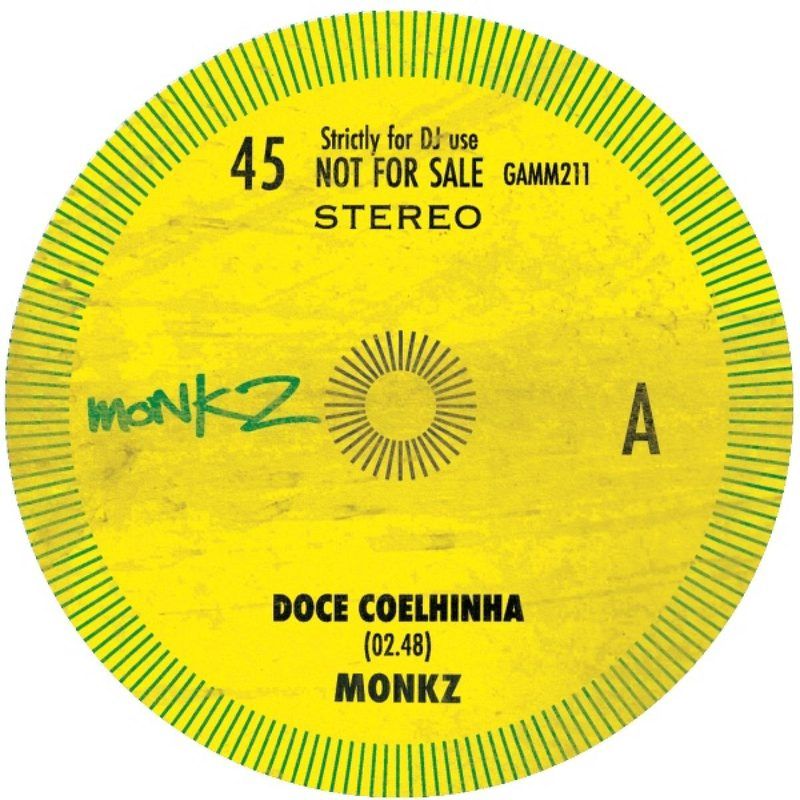
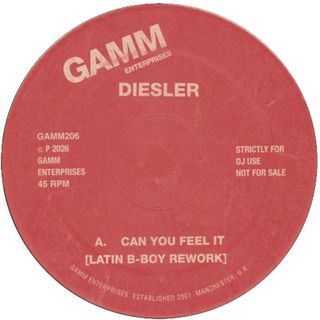
Monkz returns to GAMM Recordings with Doce Coelhinha / Wun Uv U, catalogue number GAMM211, a two-track 7-inch that connects Brazilian rhythmic influences, Chicago house, baile funk, 1980s electro and hip-hop into a compact pair of dancefloor-focused productions. Scheduled for release on November 30, 2026, the record sees the Sheffield producer returning to GAMM with two contrasting cuts: the wild samba and baile-funk fusion of “Doce Coelhinha” on the A-side and the raw, old-school Chicago house workout “Wun Uv U” on the flip.
Monkz is the artist name associated with Sheffield producer Scott Moncrieff, better known across the contemporary underground as thatmanmonkz. His production career has consistently moved between deep house, soul, hip-hop, breaks and sample-driven electronic music, with releases on labels including Delusions of Grandeur, Classic Music Company, Kolour LTD, Dirt Crew and his own Shadeleaf Music and SWAT imprints. Resident Advisor describes his production style as MPC-driven and soul-inflected, drawing particularly on the influence of Detroit and 1990s boom-bap.
That broad musical vocabulary is immediately apparent on GAMM211. Rather than approaching house music as a fixed four-to-the-floor formula, Monkz uses rhythm as a meeting point between different traditions. The A-side looks toward Brazil and the rhythmic energy of samba and baile funk, while the B-side moves in the opposite direction toward stripped-down Chicago house and hip-hop vocal culture. The result is a small record with a surprisingly wide musical range.
“Doce Coelhinha” opens the release with a deliberately unruly combination of styles. GAMM describes the track as a mix of samba rhythms, baile funk vocals and 1980s electro beats built around a Chicago 4/4 stomp. The contrast is central to its appeal: the steady house pulse provides a familiar dancefloor foundation, while the Brazilian rhythmic elements introduce syncopation, movement and a looser physical character.
The samba influence gives the percussion a distinctly different feel from conventional house programming. Rather than simply reinforcing every quarter note, the rhythmic material creates additional layers of movement around the kick. This produces a groove that feels simultaneously locked and unpredictable, making the track particularly effective for DJs who like to introduce broken or Latin-derived rhythmic ideas without abandoning a house framework.
The baile funk element adds another important dimension. Brazilian baile funk developed its own distinctive relationship between percussion, bass, vocal sampling and dancefloor energy, and its presence here gives “Doce Coelhinha” a much more physical character than a straightforward house edit. Monkz does not attempt to disguise the source of that rhythmic influence; instead, it becomes one of the track's defining features.
The 1980s electro reference provides the final piece of the puzzle. Electro's mechanical drum programming and synthetic rhythmic vocabulary sit surprisingly well alongside samba-derived percussion, creating a tension between machine precision and organic movement. Monkz uses that contrast to give the A-side its unusual personality.
The result is a track that can work across several DJ contexts. It can sit within house and disco-oriented sets, but its breaks, Brazilian percussion and hip-hop-adjacent sensibility also make it suitable for selectors moving between house, funk, broken beat and more eclectic dancefloor material. It is precisely the kind of record that can disrupt a predictable sequence without destroying its momentum.
On the B-side, “Wun Uv U” strips away much of the A-side's rhythmic complexity and moves directly into Chicago house territory. GAMM describes it as a raw, old-school Chicago house cut anchored by prominent hip-hop vocals from a familiar voice.
The difference between the two sides is substantial but logical. Where “Doce Coelhinha” gains its character from the collision of multiple rhythmic cultures, “Wun Uv U” works through reduction. The groove becomes the central element, with the vocal providing an immediately recognisable human presence over the house rhythm.
That stripped-back approach connects directly with the tradition of Chicago house, where relatively simple drum-machine patterns, basslines, vocal phrases and loops could generate extraordinary dancefloor impact. Monkz's interpretation is not presented as a historical reconstruction, however. The hip-hop vocal influence and his MPC-oriented production background give the track a contemporary sample-based character.
The vocal also changes the way the track functions in a set. Rather than relying on a complex melodic arrangement, the voice becomes the memorable element around which the rhythm can circulate. This gives “Wun Uv U” the directness of a classic house tool while retaining the rougher, sample-driven sensibility that runs throughout Monkz's work.
The pairing of the two tracks is one of GAMM211's strongest qualities. “Doce Coelhinha” is colourful, percussive and stylistically adventurous; “Wun Uv U” is deeper, rawer and more stripped down. Together they demonstrate two sides of Monkz's musical identity without making the record feel stylistically fragmented.
The release also continues a relationship between Monkz and GAMM Recordings that goes back several years. In 2017, thatmanmonkz and Simba released an EP on GAMM, with the label describing the four-track project as house-inspired reworks drawing from hip-hop, R&B and disco. The record was characterised by a deep, edgy and gritty aesthetic that fits naturally alongside the approach of GAMM211.
That earlier GAMM release is useful context because it shows that the connection between Monkz's production and the label is not new. Both share an interest in the meeting point between house music and source material from funk, soul and hip-hop. GAMM211 takes that philosophy further into Brazilian rhythmic territory on the A-side while returning to the label's deep Chicago-house roots on the B-side.
For DJs, the 7-inch format gives the release an immediate utility. “Doce Coelhinha” is the obvious crossover weapon: its samba percussion, baile funk vocals and electro references can introduce a sudden change of colour into a house or breaks set. “Wun Uv U” provides the more traditional club tool, with a raw Chicago groove and vocal presence suited to deeper house programming.
The record also has strong appeal for collectors of contemporary edit and rework culture. GAMM has long operated around the idea that established musical forms can be reshaped into effective DJ records, and Monkz's two productions continue that tradition without simply reproducing familiar sounds. The Brazilian influences on “Doce Coelhinha” and the hip-hop-informed Chicago approach of “Wun Uv U” give both sides a distinct identity.
Monkz – Doce Coelhinha / Wun Uv U, GAMM211, is ultimately a compact demonstration of rhythmic versatility. The A-side collides samba, baile funk, electro and Chicago house into a highly physical dancefloor track, while the B-side reduces the formula to a raw Chicago groove reinforced by hip-hop vocals. Separated by style but connected by Monkz's instinct for groove and sample-driven production, the two tracks make GAMM211 an unusually flexible 7-inch for DJs working across house, breaks, funk, hip-hop and global dancefloor music.