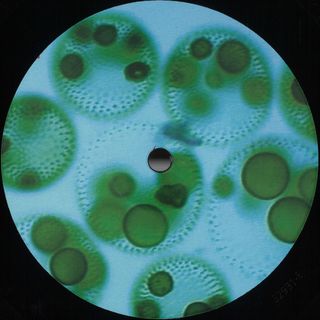
About Release
Daniel Decker – Dysthymnia LP
Daniel Decker’s Dysthymnia is a deeply personal electronic album released through Hauch, presenting a dense and introspective body of work that moves between ambient, electronica, minimalism, wave and experimental music. Issued on vinyl in September 2026, the album brings together eight compositions recorded by Decker at The Black Lodge, with the artist handling all music and recordings himself.
The title track, Dysthymnia, establishes the album’s atmosphere through restraint rather than conventional song structure. Decker works with sparse electronic textures, carefully placed rhythmic elements and an intentionally subdued sonic palette. The music feels less concerned with immediate hooks than with creating a sustained psychological environment, allowing space, silence and texture to become part of the composition.
Es steigt auf introduces a more fragmented approach to the album’s sound. One of its defining elements is a sample taken from Hainbach’s Telefunkthing, incorporated into Decker’s own recording. The use of found or manipulated sound contributes to the album’s wider interest in texture and sonic memory, placing electronic composition alongside field-recording and experimental techniques.
Gloria and Credo continue the record’s inward-looking trajectory. Rather than treating electronic music purely as a vehicle for rhythm, Decker uses synthesis and arrangement to create atmosphere and tension. The pieces operate within a restrained sonic space where small changes in texture can carry as much weight as a conventional melodic progression.
Benzodiazepine introduces another dimension to the album’s narrative. Its title sits alongside the record’s darker emotional vocabulary, while the production maintains Decker’s preference for minimal structures and carefully controlled sonic detail. The result is music that feels deliberately unresolved, resisting the conventional release points of club-oriented electronic composition.
Requiem, at over six minutes, is one of the album’s longer pieces and reinforces the sense of Dysthymnia as a continuous listening experience rather than a collection of isolated tracks. The final pair, Diffareatio and Grundrisse der Critique, complete the album without breaking its established atmosphere, extending the relationship between minimalism, ambient sound design and darker electronic textures.
Dysthymnia is particularly interesting within Daniel Decker’s wider catalogue because it sits alongside a body of work that also includes indie, punk, wave, folk, improvised music and experimental recordings. His 2026 releases demonstrate a willingness to move between forms rather than remain confined to a single genre, with Dysthymnia representing one of the clearest electronic and ambient-oriented chapters of that catalogue.
The album’s production was carried out at The Black Lodge, with all music and recordings credited to Decker. This gives Dysthymnia a distinctly self-contained character: composition, recording and sonic construction originate from the same creative process rather than being separated between producer, studio and performer.
For listeners and collectors, Dysthymnia works best as an album rather than a conventional DJ record. Its appeal lies in atmosphere, sound design and gradual immersion, making the vinyl particularly relevant to listeners interested in leftfield electronics, ambient, minimalism and experimental music. The Hauch edition places this material into a physical format that suits its deliberate pacing and detailed production.
Dysthymnia is ultimately a study in controlled atmosphere. Daniel Decker avoids obvious genre formulas, instead constructing an electronic world from reduced rhythms, synthetic textures, samples and carefully measured arrangements. The result is an introspective and uncompromising album that rewards attention rather than demanding it.