About Release
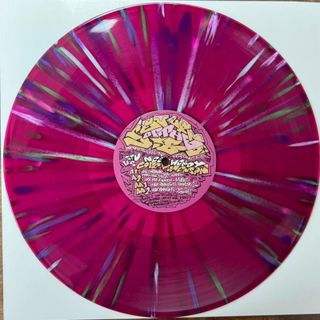
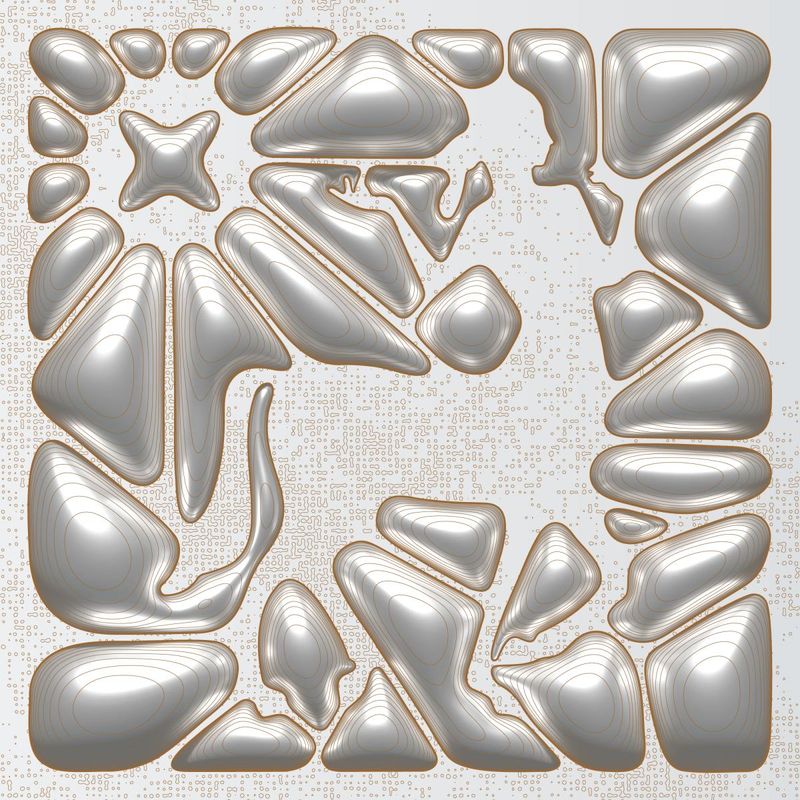
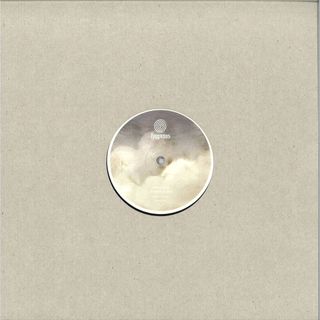
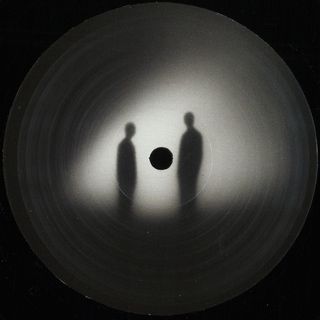
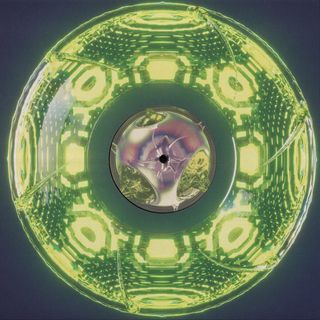
Human Space Machine returns to Midgar Records with Perception Field, a five-track 12-inch released as MDG028 to mark the Italian label’s 12th anniversary. Produced by Dutch artist Mike Jungerius, the record explores techno through the idea that perception is never fixed: sounds can move between foreground and background, rhythmic elements can change their apparent weight, and subtle textures or negative space can become as important as the main groove. Released in April 2026, Perception Field is a focused study in atmosphere, sound design and shifting rhythmic perspective.
Midgar Records has built its catalogue around experimental and forward-thinking electronic music, and Perception Field fits naturally into that aesthetic. The EP is classified primarily as techno, but its five tracks avoid being confined to a single functional template. Across the record, Jungerius works with different levels of rhythmic pressure and spaciousness, allowing the material to move from dub-inflected depth to more forceful, hypnotic club territory. The result is a record that rewards close listening while retaining a clear relationship with the dancefloor.
The Field opens the A-side with a locked-in rhythmic structure surrounded by dubby ripples and finely controlled atmospheric detail. The track's impact comes from the relationship between repetition and small changes rather than from a conventional melodic hook. Watery, high-frequency textures sit above the groove, creating a sense of depth while the central rhythm remains deliberately restrained. This balance between a physical pulse and an almost environmental layer of sound establishes the conceptual framework for the EP immediately. The Field works particularly well as a deep, hypnotic tool where gradual movement is more important than obvious breakdowns.
U77 follows with a deeper and more spacious interpretation of the record's techno language. The track creates a cavernous atmosphere, using room and negative space as active elements within the arrangement. Instead of filling every frequency range, Jungerius allows individual sounds to breathe, making the gaps between rhythmic events part of the composition. The result is immersive rather than aggressive, with the groove providing continuity while the surrounding textures alter the perceived scale of the track. In a DJ set, U77 can function as a transition into deeper territory, particularly when the mix requires atmosphere without losing rhythmic focus.
Totem closes the A-side with a more urgent approach. The kick becomes firmer and the percussion more animated, giving the track a stronger forward drive than the preceding two productions. Its rhythmic character is slightly more irregular and unpredictable, with distorted or off-centre percussion adding movement around the central pulse. This is where the idea of perception becomes particularly tangible: familiar techno components remain in place, but their relationship changes, making the groove feel more animated and unstable. Totem provides the A-side with a natural increase in intensity without abandoning the spacious production aesthetic established earlier.
The B-side begins with Gallop, one of the most immediately physical tracks on the EP. The title reflects its rhythmic character, with a fast-moving, stepping groove that gives the track a sense of continuous propulsion. Beneath the driving rhythm, atmospheric and tonal details prevent the production from becoming purely functional. Gallop therefore occupies an effective middle ground between deep techno and more energetic club music, maintaining a hypnotic quality while increasing the record's momentum. Midgar chose the track as an early preview of the EP, reinforcing its role as one of the release's central club-focused moments.
Zeven closes the record by shifting attention back towards intricate percussion and darker atmospheric detail. The rhythmic framework is accompanied by more unusual percussive shapes, while ghostly vocal elements add another layer of ambiguity to the arrangement. Rather than resolving the EP into a conventional finale, Zeven leaves the listener with the same sense of uncertainty that defines the record's concept: sounds emerge, recede and change their apparent importance depending on how closely they are heard. It is an appropriate closing track for a release concerned with the changing relationship between listener, space and sound.
Perception Field is particularly strong in its use of contrast. The record does not rely on a single tempo, density or level of intensity across all five tracks. Instead, Jungerius treats tempo, texture, rhythmic weight and empty space as compositional variables. That gives each track an individual function while keeping the EP coherent as a complete work. The music can be approached as straightforward techno in a club environment, but the production details become increasingly apparent when listened to outside the dancefloor.
The release also demonstrates the depth of Human Space Machine's production approach. Mike Jungerius handles the writing and production himself, while the mastering was completed by Stefan Betke at Scape Mastering in Berlin. The mastering connection is particularly appropriate for a record whose character depends so heavily on space, texture and carefully controlled low-frequency weight. The physical edition was pressed by AFG Record Manufacturing, with Midgar presenting the release as part of its 12th-anniversary catalogue.
For DJs, Perception Field provides a versatile selection of deep and hypnotic techno tools rather than five variations on exactly the same formula. The Field and U77 are suited to spacious, reduced sections of a set; Totem introduces greater rhythmic urgency; Gallop provides the most obvious driving momentum; and Zeven returns to a more intricate and atmospheric mode. The tracks can therefore be used independently while also forming a coherent sequence when played as an EP.
As MDG028, Perception Field is both a continuation of Midgar Records' exploratory techno catalogue and a precise statement of Human Space Machine's production philosophy. Across The Field, U77, Totem, Gallop and Zeven, Mike Jungerius demonstrates how relatively familiar techno components can acquire different meanings through changes in density, spatial treatment, rhythm and context. The result is a sophisticated five-track 12-inch in which groove, sound design and negative space are given equal importance, making Perception Field equally compelling as a DJ record and as a focused electronic listening experience.