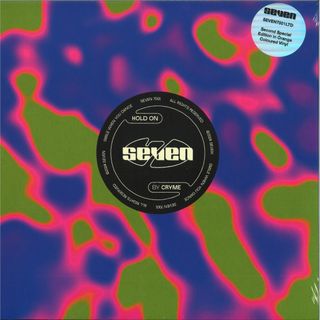
About Release
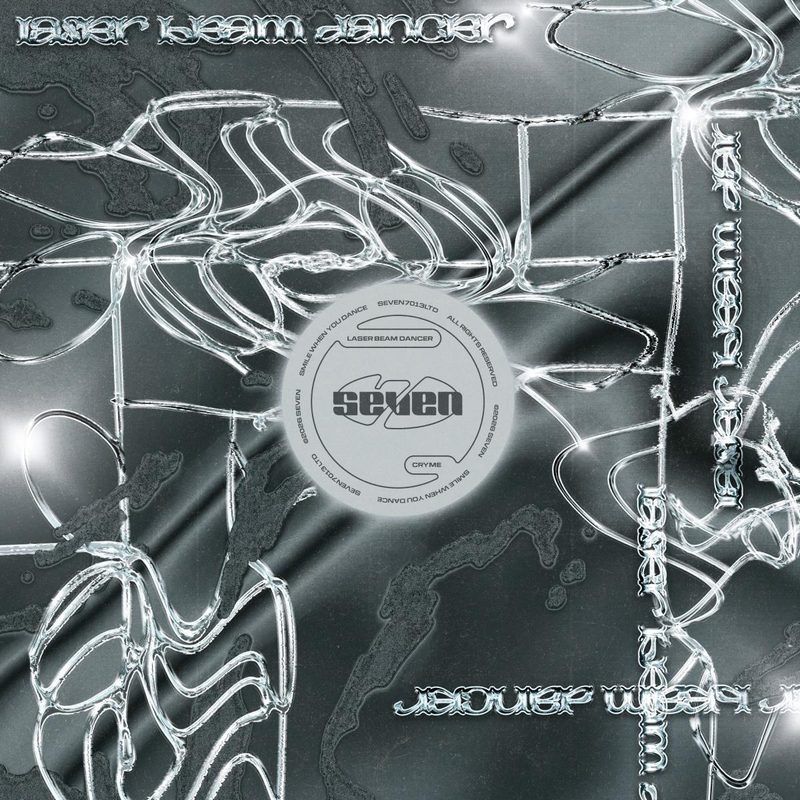
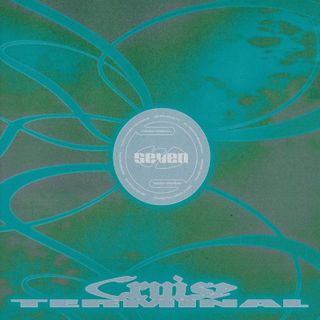
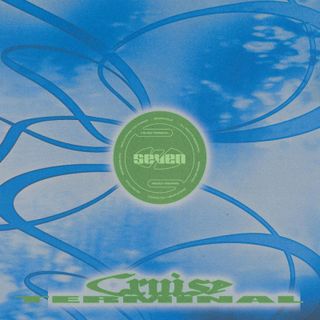
CRYME returns to SEVEN with Laser Beam Dancer, catalogue number SEVEN7013, a four-track 12-inch release that marks the Berlin producer’s third solo EP on the label. Scheduled for release on October 16, 2026, the record introduces a more subtle and exploratory direction in CRYME’s production while retaining the rhythmic drive and dancefloor focus that define his work. Across “Laser Beam Dancer”, “Pinky Paradise”, “Lovender” and “Saiph Altar”, the EP moves from bubbly, techy minimal on the A-side toward more dubbed, spacious and atmospheric territory on the B-side. Both black and coloured 12-inch editions are being issued by SEVEN.
CRYME is a Berlin-based producer and DJ whose work is closely connected to the city’s house music community. His artist profile describes a style built around vocal-heavy productions, timeless club sounds and an ability to establish an intimate connection with the dancefloor. He is also a co-founder of SEVEN, the Berlin label behind Laser Beam Dancer, making this release particularly significant within the imprint’s catalogue.
The new EP represents a conscious step into a subtler area of CRYME’s sound. SEVEN describes the four tracks as more adventurous and experimental than his previous work, while still maintaining a clear club orientation. The label’s description places the record in the territory of early-morning festival music: that transitional point when darkness begins to give way to daylight, the atmosphere changes and the dancefloor becomes less about peak-time impact and more about immersion, movement and sustained energy.
The title track, “Laser Beam Dancer”, opens the record and establishes its rhythmic language. At just over six minutes, it provides the first statement of the EP’s more complex but accessible approach. The A-side is described by the label as “bubbly, techy and quirky minimal”, a combination that immediately places the track within a stripped-down house and minimal framework while allowing considerably more personality than a purely functional club tool.
The emphasis here is on movement. Rather than building the track around a large melodic climax, CRYME works with rhythmic detail and shifting electronic elements to create continuous forward motion. The “bubbly” quality suggests a playful surface to the production, while the techy character keeps the groove firmly connected to the club. The result is music that can maintain momentum without relying on maximum intensity.
“Pinky Paradise” continues the A-side’s minimal direction. Positioned alongside “Laser Beam Dancer”, it reinforces the EP’s preference for rhythmic intricacy, lightness and movement rather than heavy-handed peak-time pressure. The two tracks form a coherent first half, establishing the record’s more immediate dancefloor identity before the B-side changes the spatial character of the music.
This distinction between the two sides is one of the most important features of Laser Beam Dancer. Rather than presenting four tracks that occupy exactly the same sonic territory, CRYME uses the physical format to create a gradual transition. The A-side concentrates on techy, quirky minimal grooves, while the B-side opens the production into a more dubbed and spacious environment.
“Lovender” begins that transition. The track is positioned within the EP’s more atmospheric second half, where dub-oriented production and open space become increasingly important. Compared with the tighter minimal approach of the opening side, the B-side allows greater emphasis on atmosphere and depth. The rhythmic foundation remains essential, but the surrounding sound is less concerned with immediate definition and more with creating a sense of environment.
That makes “Lovender” particularly relevant for DJs working with longer, gradual transitions. Dub-influenced club music often derives its power from the relationship between sound and space, and CRYME uses this principle to move the EP away from the playful precision of the A-side toward a deeper, more immersive territory. The track does not abandon the dancefloor; instead, it changes the way the dancefloor is approached.
“Saiph Altar” closes the record and completes this movement into more spacious territory. As the final track, it belongs to the atmospheric side of the EP and reinforces the sense that Laser Beam Dancer is designed as a progression rather than simply a collection of four unrelated club tracks. The music remains driven, but the emphasis has shifted toward depth, texture and the psychological effect of space.
The result is especially suited to the later stages of an extended set or the early-morning transition described by SEVEN. At that point in a night, a DJ may want to preserve movement without simply increasing intensity. Records that combine a strong rhythmic foundation with atmosphere can perform a different function: they allow the floor to remain engaged while changing the emotional temperature of the room.
From a production perspective, the EP’s defining characteristic is therefore balance. CRYME does not move completely away from the directness of house music, nor does he turn Laser Beam Dancer into an abstract listening exercise. Instead, the four tracks occupy the space between functional club music and more exploratory electronic production. SEVEN describes the material as “complex music full of movement” that remains easy to listen to while keeping the crowd moving, an approach that neatly summarises the record’s purpose.
The release also fits naturally into the identity of SEVEN. Based in Berlin, the label describes itself as a queer and FLINTA*-leaning imprint focused on the community and culture surrounding Berlin’s house music scene. Its catalogue includes CRYME’s earlier SEVEN releases alongside productions from artists such as Moody Mehran, Ackermann, Stef de Haan, Christoph Faust and others. Laser Beam Dancer therefore represents not only another CRYME record but another step in the development of the label’s house-oriented catalogue.
CRYME’s previous releases on SEVEN include HOLD ON, REALITY RUSH, The Backroom EP and collaborations including Saveur de Monbi with Ben Reymann. His discography demonstrates a continuing interest in house music that can draw from classic club vocabulary without becoming tied to a single historical style. The new EP extends that trajectory by placing greater emphasis on subtlety, experimentation and spatial atmosphere.
For DJs, SEVEN7013 offers two complementary working environments. The A-side is the more immediately functional section, with “Laser Beam Dancer” and “Pinky Paradise” suited to sets requiring detailed, energetic minimal grooves. The B-side provides a different kind of tool: “Lovender” and “Saiph Altar” introduce dubbed and spacious qualities that can help create a deeper transition without sacrificing rhythmic continuity.
For collectors, the record is also notable as the third solo CRYME EP on SEVEN and as a release that documents a new stage in the producer’s sound. The 12-inch is available in both standard and coloured-vinyl editions, with the label confirming a physical release date of October 16, 2026.
CRYME – Laser Beam Dancer is ultimately a record about controlled movement: playful minimal rhythms on the A-side, increasingly spacious and dubbed textures on the B-side, and a consistent commitment to the dancefloor throughout. Rather than chasing maximum impact, CRYME explores the space between subtle production detail and physical club energy. That makes SEVEN7013 particularly suited to DJs who value records capable of changing the atmosphere of a room without breaking its groove — especially during those long, atmospheric hours when the night begins to turn into morning.